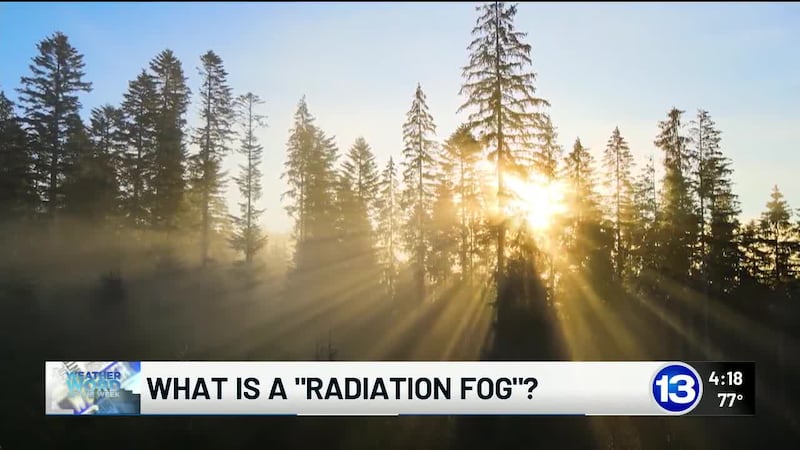
It’s kind of a weather front, kind of not… and it doesn’t change the temperature. Meteorologist Derek Witt is breaking down another type of atmospheric boundary in this Weather Word of the Week.
Cold fronts, warm fronts, and occluded fronts are all types of weather fronts that move, but what happens when one of them slows down or stalls entirely? Meteorologist Derek Witt explains.
When severe weather is threatening, there are numerous details our weather team analyzes to better understand the risk. First Alert Meteorologist Derek Witt explains one of those features in this Weather Word of the Week.
Warm fronts are red and cold fronts are blue, so what type of weather front is purple? Meteorologist Derek Witt explains in this “Weather Word of the Week.”
It’s one of the signature signs on a weather map that big changes are coming. Meteorologist Derek Witt details this famous type of front in our “Weather Word of the Week.”
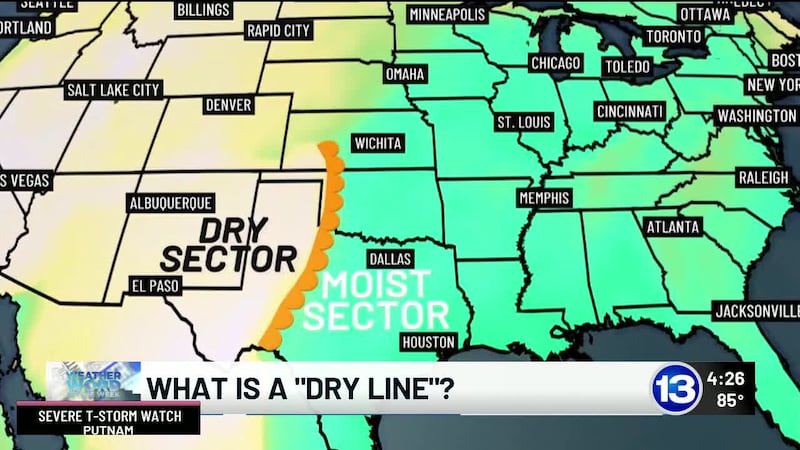
When severe weather is possible, there’s a certain “danger zone” that forecasters look for. First Alert Meteorologist Derek Witt explains in this Weather Word of the Week.
After a long, cold winter, a warm front can sound like a welcome development. But sometimes they can create a little trouble. Here’s Meteorologist Derek Witt with this Weather Word of the Week.
We know that frost can form when it’s cold outside, but why does it happen? First Alert Meteorologist Derek Witt explains the science behind the scraping in this “Weather Word of the Week.”
Have you ever noticed how sometimes we'll lose some snow when temps are still well below freezing? Meteorologist Derek Witt explains why that happens in this "Weather Word of the Week."
As air temperatures rise this week, area waterways could become dangerous as the ice starts to melt. Meteorologist Derek Witt details the danger in this "Weather Word of the Week".
When our weather team says the air is going to bite… sometimes they mean that quite literally. Meteorologist Derek Witt explains in this Weather Word of the Week.
When describing how much snow has fallen, there are a lot of subjective terms thrown around. But one in particular has a specific definition. First Alert Meteorologist Derek Witt explains in this “Weather Word of the Week.”
What constitutes a “normal” weather day? Turns out there’s a way in which meteorologists calculate that! First Alert Meteorologist Derek Witt explains.
Behind the scenes, forecasters have many different tools they use to predict the weather. First Alert Meteorologist Derek Witt explains one of their most valuable tools in this Weather Word of the Week.
The further out you go in a weather forecast, the harder it is for meteorologists to know what’s going to happen. So how do they get an idea of what’s coming down the pipe several days or weeks ahead of time? Meteorologist Derek Witt explains in this Weather Word of the Week.
It’s the invisible threat on roads that lingers throughout the winter. First Alert Meteorologist Derek Witt explains the slippery situation in this “Weather Word of the Week.”
It's that time of year when the lake-effect snow machine starts to turn on. Meteorologist Derek Witt explains how and why in this Weather Word of the Week.
First Alert Meteorologist Derek Witt tells us about the term used to describe rapidly intensifying low-pressure systems in this "Weather Word of the Week."
When it comes to tracking the motion of storm systems, forecasters must account for every little influence, including the rotation of the Earth itself! Meteorologist Derek Witt explains.
Meteorologist Derek Witt is on a mission: to make it common knowledge that dew point is the correct way to assess how muggy it feels during the summertime.
When watching the forecast on 13 Action News, the First Alert Weather Team will often show the latest images on "doppler radar." Meteorologist Derek Witt explains the name.
When meteorologists are keeping an eye on the sky, their radars can detect many different things. Meteorologist Derek Witt explains this awesome capability in this "Weather Word of the Week."
It was invented in World War II to track planes, and now meteorologists use it to track storms! Meteorologist Derek Witt has this "Weather Word of the Week."
They're one of the most difficult systems for meteorologists to forecast. Derek Witt breaks down the science behind this fickle phenomenon in this Weather Word of the Week.
For a thunderstorm to happen, everything needs to come together just right in the atmosphere. Meteorologist Derek Witt breaks down an important factor in this Weather Word of the Week.
When the sirens howl and the 13 First Alert Weather Team is tracking potential tornadoes, there’s something they look closely for on radar. Meteorologist Derek Witt explains.
This may surprise you, but weather balloons launched by the National Weather Service are one of the most critical elements in the creation of weather forecasts, and they have been since the 1930s.